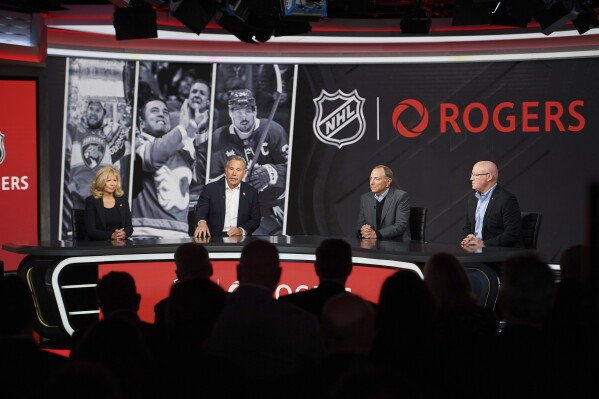
Rogers and the NHL Begin a 12-Year Rights Era: What Canadian Fans Should Expect in 2026–27
A long national media agreement creates stability and concentration. Its value will be measured by access, production ambition and fewer reasons to ask where the game is.
A 12-year media agreement is an infrastructure decision disguised as a television contract. The NHL and Rogers are beginning a Canadian rights cycle reported at extraordinary scale, giving the broadcaster time to invest in production, technology, talent and distribution. It also concentrates responsibility. When one partner occupies such a large place in the national hockey experience, access and innovation cannot be separated from accountability.
The 2026–27 season is the first public test. Fans will judge where games appear, how streams behave, whether regional and national windows make sense, and whether the presentation helps them understand a faster, more tactically complex league. Clubs need consistent schedules and media workflows. Advertisers need dependable reach. The partnership has enough duration to solve difficult problems, which means first-year inconvenience should not be excused as inevitable.
Long duration can support real infrastructure
Production systems, low-latency streaming and accessibility require sustained investment. A 12-year horizon allows the partner to build rather than rent capability for one cycle.
The preparation question is operational, not ceremonial. Around the opening of the 2026–27 NHL season and the first year of a new 12-year Canadian national media cycle, the people responsible for competition, venue delivery, media and partner activity need one shared calendar and explicit boundaries. The commercial program succeeds when it removes friction from the event rather than creating another schedule the team must carry. In practical terms, that means rehearsing the experience, identifying failure points and protecting the periods in which athletes and coaches need to work without interruption.
One schedule needs a clear viewer map
National, regional and out-of-market distinctions should be explained in ordinary language. Search and team pages should direct fans to the correct destination without requiring rights expertise.
The strategic fit can be stated plainly: the partnership is trying to give Rogers long-term premium hockey rights and the NHL predictable national revenue, reach and investment capacity. That objective is credible only when the team-side requirement is respected—to provide stable production and scheduling while respecting local storytelling, player workload and competitive preparation. The two goals are related but not identical. Strong management acknowledges where they compete for time, access or attention and makes the trade-off before event week, when every request becomes more expensive.
Overlapping games are the design challenge
An 84-game schedule creates nights with many simultaneous starts. Multiview, alerts, replay and condensed options can help, but controls must remain simple on television remotes and mobile screens.
From the supporter’s perspective, the relevant promise is to make Canadian hockey easier to find, watch and understand across broadcast and digital devices. Fans are not an impression total. They experience queues, prices, interfaces, sightlines, service and the emotional rhythm of the game. A partnership that creates large reach while making one of those jobs harder has transferred value away from the audience. That cost should appear in the evaluation instead of being hidden behind total engagement.
Local voices still create national value
Analysts close to a club understand prospects, systems and history. National scale should distribute that knowledge rather than replace it with a single generic tone.
Brand value should come from association and useful action, not from pretending the sponsor caused the sporting result. The strongest role for the NHL’s long-term national rights partnership with Rogers is to make a relevant part of the event easier, richer or more accessible and then allow the competition to remain unpredictable. That restraint protects credibility when the favored team loses, a star is unavailable or the season’s story moves somewhere the campaign did not expect.
Advertising load affects the sport itself
Hockey’s natural breaks are limited and valuable. New digital inventory should not increase overlays or interruptions that obscure live action and frustrate the audience.
Community legitimacy requires more than a local visual reference. The partnership should identify who is included, who receives resources and who has decision-making power. Programs built around youth, small businesses, education or local culture need repeat contact and public outcomes. Otherwise community language becomes a mood board that helps national marketing while leaving the community itself unchanged.
Accessibility is a first-year requirement
Captions, descriptive support, readable graphics and device compatibility should launch with the agreement. They are core reach, not enhancements for a later roadmap.
The measurement plan should focus on reach, stream reliability, churn, production quality, discoverability, accessibility, regional satisfaction and growth among younger viewers. Those indicators separate output—assets published, signs installed, attendees counted—from outcome. They should also be compared with a sensible baseline. A popular event can create growth without the partnership, and a difficult season can hide a useful program. Serious analysis asks what changed because the partners acted and whether that change is worth the money, data and attention invested.
Clubs need predictable media obligations
Travel and recovery already intensify in the new schedule. Interview windows and promotional production should be planned early so national ambition does not create daily friction for teams.
The central downside is that rights concentration can reduce competitive pressure, while fragmentation, blackouts or price growth would make a large agreement feel smaller to viewers. This is not a reason to reject the relationship. It is the condition the agreement should be designed to manage. Clear consent, accessible alternatives, operational testing, honest product language and a visible way to report problems are more convincing than a promise that a well-known partner automatically brings trust.
Twelve years demands public checkpoints
Regular reporting on reach, reliability and fan satisfaction would keep a long agreement responsive. Stability should mean the freedom to improve, not insulation from feedback.
The next evidence is the opening-night product map, digital features and how Rogers handles overlapping games across an 84-game schedule. Readers should watch how the plan behaves after novelty fades and under the least convenient conditions: a crowded venue, a losing stretch, a technical failure, an unpopular decision or a game whose story belongs entirely to the opponent. A durable partnership remains useful when it cannot control the mood around it.
The preparation work that will decide the outcome
The visible launch will occupy only a small part of the work required around the opening of the 2026–27 NHL season and the first year of a new 12-year Canadian national media cycle. Team operations, venue staff, commercial managers, media producers and the partner need a single decision map well before the audience arrives. That map should identify who owns each fan touchpoint, which requests can reach players and coaches, how late changes are approved, and what happens when technology, travel or weather breaks the original plan. The point is not to eliminate improvisation. Sport will always create it. The point is to keep commercial improvisation from interfering with competitive preparation.
A useful readiness review would separate the week into protected football or game-preparation windows, public storytelling windows and sponsor-delivery windows. It would also test the least glamorous details: credential access, signage sightlines, translation, accessibility, data consent, queue recovery, customer support and the handoff from a branded experience back to the event itself. Those details rarely lead a launch announcement, yet they determine whether a partnership feels integrated or attached. If the relationship requires athletes to solve operational confusion during event week, the preparation has already failed.
The team should also define what it will not do. Around this project, that means protecting the requirement to provide stable production and scheduling while respecting local storytelling, player workload and competitive preparation. A boundary can include limits on filming, mandatory appearances, locker-room access, product claims or last-minute content. Clear limits do not reduce a sponsor’s value. They make the available rights more dependable, because the brand knows what can be delivered and the team avoids resentful participation. The strongest partnerships are built on reliable access rather than theoretically unlimited access.
How the partnership could change competitive and commercial value
The first-order business case is to give Rogers long-term premium hockey rights and the NHL predictable national revenue, reach and investment capacity. The deeper impact depends on whether the partnership creates a capability that remains useful after the campaign. Better distribution, smarter service, stronger local relationships, new audience understanding or a more resilient event operation can all compound across a season. A temporary burst of attention cannot. Executives should therefore separate media value from capability value in the post-event review and be honest about which one they purchased.
Competitive impact is usually indirect, but indirect does not mean irrelevant. Travel planning can affect recovery. A crowded appearance schedule can affect attention. Better venue information can reduce stress around arrival. More useful youth and community programs can strengthen the organization’s local talent and trust pipeline. None of those effects guarantees a result, and the partner should never claim it caused a win. They do show why commercial strategy belongs inside operational planning instead of being handed to a separate department after the sporting calendar is set.
There is also a portfolio question. Every club, league or conference has limited visual space, supporter attention and staff capacity. Adding the NHL’s long-term national rights partnership with Rogers means saying no to another use of those assets. The correct comparison is not partnership versus nothing; it is this partnership versus the next-best deployment of money, data, inventory and time. If the program can improve the fan promise to make Canadian hockey easier to find, watch and understand across broadcast and digital devices while producing credible commercial return, the trade is defensible. If it mostly creates another logo, the opportunity cost will grow as the calendar becomes more crowded.
What serious readers should monitor next
Readers do not need access to a private contract to evaluate execution. Start with observable behavior. Does the sponsor appear in moments that fit its stated role? Can fans use the service without surrendering unnecessary data? Are community beneficiaries visible beyond launch day? Do broadcasts explain the sporting stakes before repeating brand language? Does the organization respond clearly when an activation fails? These signals reveal whether decision-makers designed a working program or simply sold inventory.
The most revealing evidence will be the opening-night product map, digital features and how Rogers handles overlapping games across an 84-game schedule. That evidence should be read alongside reach, stream reliability, churn, production quality, discoverability, accessibility, regional satisfaction and growth among younger viewers. No single number can settle the question. Reach can rise while trust falls; participation can grow because an event was already popular; positive social reaction can mask service problems experienced by quieter fans. A balanced review uses commercial results, operating quality and audience outcomes, then asks whether improvement lasted beyond the first announcement.
Finally, watch how the partners discuss weakness. A credible relationship can acknowledge that rights concentration can reduce competitive pressure, while fragmentation, blackouts or price growth would make a large agreement feel smaller to viewers. It can publish the adjustment, explain the standard and invite useful feedback without turning every criticism into a public-relations contest. That willingness matters because upcoming games and tournaments create hard deadlines. The organization cannot postpone the event until the campaign is perfect. It can, however, show that learning is part of the plan and that supporter experience carries the same seriousness as brand exposure.
What a high-value partnership should prove
A logo can confirm that money changed hands. It cannot confirm that a partnership improved the event. The higher standard is alignment across three groups. The organization should gain resources or capability it could not create as efficiently alone. The partner should receive a relevant platform rather than raw exposure detached from its business. Fans and communities should receive a clearer, safer or more rewarding experience. If one group captures nearly all the value, the arrangement may still be commercially successful, but it is not strategically balanced.
That balance also has to survive time. Launch metrics reward curiosity. Second-season metrics reveal habit, trust and operational quality. Gamehai will judge this story by the repeat behaviors around the opening of the 2026–27 NHL season and the first year of a new 12-year Canadian national media cycle, the transparency of the value exchange and the partners’ willingness to revise weak parts of the program. The goal is not to oppose commercialization. It is to distinguish sponsorship that supports sport from sponsorship that merely occupies it.
The Gamehai verdict
the NHL’s long-term national rights partnership with Rogers has a defensible strategic idea and a real opportunity around the opening of the 2026–27 NHL season and the first year of a new 12-year Canadian national media cycle. The positive case is strongest where the relationship connects commercial reach with preparation, access or community capability. The unanswered questions concern execution, measurement and the cost imposed on people who did not negotiate the agreement. Those questions should remain visible throughout the season.
For serious readers, the practical test is simple: look past the first reveal. Watch what the team changes, what the partner enables, what the fan can actually use and what evidence appears after the event. A valuable partnership becomes part of the infrastructure and then gets out of the way of the game. A weak one keeps asking to be noticed.