Yankees–Red Sox Will Be Decided Before the Bullpens Take Over
A best-of-three series turns every starting-pitching choice into a leverage decision. The rivalry is the backdrop; sequencing is the contest.
The Yankees and Red Sox begin their American League Wild Card Series on September 29 with all the familiar historical weight and almost none of the time normally required for history to matter. The Yankees won the 2026 regular-season series 7–6. They also won last year’s Wild Card meeting in three games. Neither fact offers much protection in a format where one poor first inning can force a club to manage the next two days differently.
Both teams enter with high-end pitching evidence. Boston can turn to Sonny Gray, who finished 18–5 with a 2.72 ERA and 20 quality starts, or rookie Payton Tolle, who went 9–6 with a 3.03 ERA. New York has its own rotation decisions involving Gerrit Cole and Cam Schlittler. The headline matchup will be called a rivalry. The series itself will be an argument about when to spend the best innings.
Game 1 is not automatically the ace’s longest night
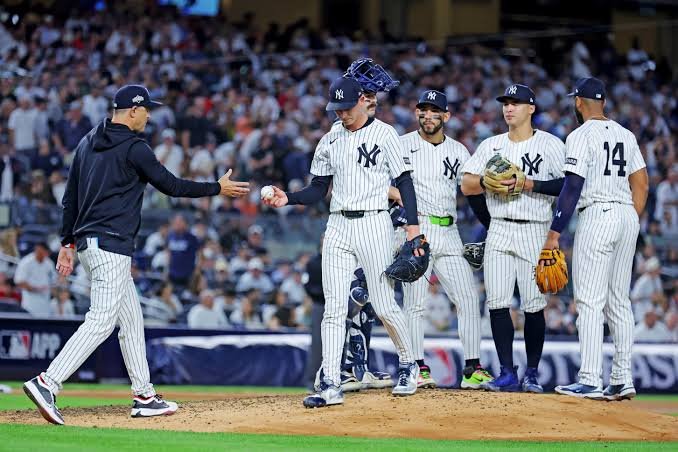
October convention says the best starter should work as deep as performance allows. A three-game series complicates that instinct. The manager must compare the value of one more trip through the order with the value of giving a fresh reliever a clean inning. A starter can be pitching well and still face a materially worse matchup the third time certain hitters appear.
The right hook depends on pitch quality, not just pitch count. Is the fastball carrying at the top of the zone? Are hitters taking closer swings against the secondary pitch? Has the bottom of the order begun extending plate appearances? A predetermined threshold can be useful, but the series may be decided by recognizing the moment the starter’s current advantage becomes a memory.
Boston’s choice changes the shape of the early innings
Gray’s season provides the comfort of volume and repeated quality. Tolle offers a different look and the unpredictability of a rookie opponent has seen less often. Choosing between them is not simply choosing experience or upside. It is choosing which matchups Boston wants to create later in the series and which bullpen roles must be available behind Game 1.
If Boston starts the pitcher most likely to work six innings, it can preserve relievers for the games that follow. If it starts the pitcher whose repertoire best attacks New York’s current lineup, it may maximize the probability of taking immediate control. The important part is alignment: the starter choice, expected lineup turns and bullpen bridge must be one plan, not three separate decisions.
New York must decide how much length it actually needs
Cole’s name invites the expectation of a traditional ace assignment, while Schlittler gives New York another kind of option. The Yankees should resist managing the reputation. Their advantage comes from matching the pitcher’s current weapons to Boston’s swing decisions. If the Red Sox are laying off the chase pitch and forcing deep counts, length may disappear regardless of the starter’s pedigree.
New York can prepare by identifying the first pocket of the Boston order that justifies intervention. The plan may be five strong innings and an aggressive bullpen sequence. It may be allowing the starter to face the top again if the breaking ball remains sharp. The dangerous approach is waiting for visible damage because “the ace deserves the inning.” In a best-of-three, the next batter is not an honor; it is a probability.
Ben Rice can change Boston’s entire map
Rice entered the postseason with 40 home runs and added his 41st on September 23, including six in September. That power forces Boston to make a choice about where to attack. Pitching around one dangerous hitter in the regular season may be acceptable. In a short series, free baserunners can create the exact multi-run inning both staffs are built to avoid.
Boston’s best response is not generic caution. It is precise aggression to the parts of the zone where Rice does the least damage, supported by a defensive plan for the hitters around him. If the Red Sox repeatedly fall behind, the at-bat becomes Rice’s. If they challenge predictably, his power can turn a stable inning into the series’ defining moment.
The lineups should be built for the first two plate appearances
Managers often choose a postseason lineup as if all nine hitters will face the starter three times. In this format, the first six innings may involve a starter, a bridge reliever and a leverage arm with completely different shapes. A hitter selected only for a platoon advantage in the first inning can become a liability when the bullpen arrives.
The better construction values switchable skills: strike-zone control, the ability to handle velocity and a bench that can answer the first pitching change without weakening defense everywhere else. Pinch-hitting is not only a batter-for-batter move. It can force the opponent to reveal the next reliever and reshape two innings of matchups.
Defense and baserunning become run-production systems
When both staffs suppress long rallies, a first-to-third read, an outfield route or a clean transfer on a double-play ball becomes part of the offense. Neither club can assume the home run will solve every quiet inning. The best baserunning decision may create a sacrifice-fly opportunity; the best defensive decision may prevent the opponent from creating the same one.
These are not calls for reckless “October baseball.” Outs become more valuable in a short series, not less. Aggression should be attached to information: arm strength, ball location, runner speed and the next hitter. The clubs that make context-specific decisions will look less dramatic than the clubs that run on emotion—and will usually be more dangerous.
The rivalry can distort managerial judgment
Yankees–Red Sox games produce a public demand to respond immediately. A manager who removes a famous starter early, rests a slumping veteran or declines to retaliate for a hit batter will be judged through rivalry language. The series rewards the opposite mindset. Every decision has to survive without the logos attached.
The clubs know each other well enough that surprise will be limited. The advantage will come from acting one batter earlier, recognizing one pitch trend sooner and refusing to let narrative keep the wrong player in the wrong matchup. Emotional control is not separate from strategy. It is what allows the strategy to be used.
What to watch in Game 1
Record the first time each lineup reaches a two-strike count and how the pitcher tries to finish. Watch whether the top hitters see the same plan in their second plate appearance. Note which relievers begin warming before trouble becomes obvious; that will reveal whether the managers are following a matchup map or reacting to the scoreboard.
The series will eventually be described through a home run, strikeout or bullpen escape. The causes will begin earlier: starter selection, lineup flexibility and the willingness to treat the third time through the order as a new matchup rather than a continuation. Before the bullpens take over, both teams will have decided how much danger to leave them.
How Gamehai reached this view
Gamehai reviewed the official league, team and governing-body material listed below, then separated reported facts from editorial interpretation. The analysis focuses on repeatable mechanisms—deployment, sequencing, workload, matchup and decision quality—rather than treating one result as permanent proof. No team, league, athlete, sponsor or commercial partner reviewed or approved this article.
Current-affairs analysis can change as injury information, lineups and official decisions develop. We preserve that uncertainty by identifying what evidence would strengthen or weaken the argument and by correcting material errors under our published corrections policy.