Why the Cowboys’ Backup-Quarterback Battle Is Really About Offensive Insurance
Dallas is not simply choosing a second quarterback. It is deciding which parts of the offense must survive if the starter misses time.
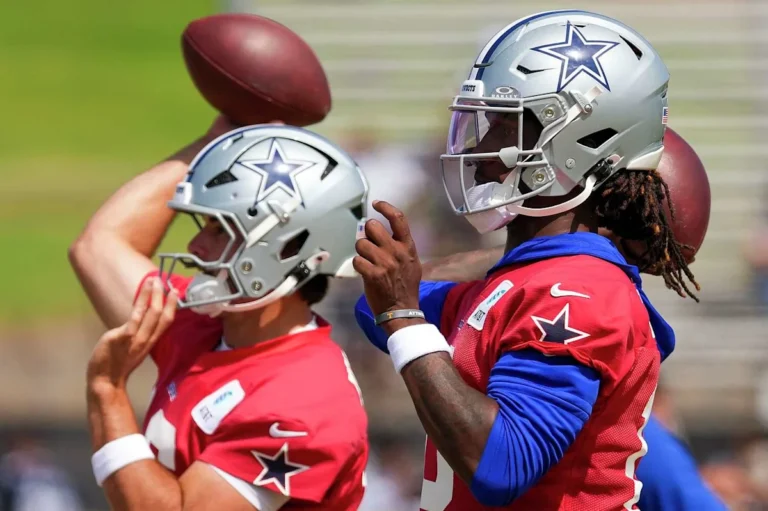
Backup-quarterback competitions are usually discussed like miniature elections: one candidate wins, the other loses, and a few preseason drives provide the final ballot. That framing misses the more important decision in Dallas. The Cowboys are choosing an insurance policy for an offense built around a very specific starter, protection plan and passing rhythm. The best backup is not automatically the player with the flashiest arm or the cleanest August stat line. It is the player who can preserve the greatest amount of the weekly offense when preparation time is limited.\n\nJoe Milton and Sam Howell represent different kinds of protection. Milton’s size, arm strength and movement can expand the emergency menu, especially when a play breaks structure. Howell offers more conventional experience managing full-field progressions and surviving volume. The Cowboys have to decide whether the second unit should imitate the starter’s job description or give the coaching staff an alternate way to win. That is a roster-construction question as much as a depth-chart question.
Continuity has a weekly value
A backup rarely receives a full offseason to become the center of the offense. He may enter after halftime or begin a short week with only a few practices. In that setting, familiarity with protections, route adjustments and the center’s calls can matter more than theoretical upside. Dallas should measure which quarterback keeps the offense on schedule when the first read is covered. Can he identify the pressure, move the protection and reach the checkdown without creating a negative play? Those snaps are less memorable than a deep completion, but they determine whether the playbook remains intact when the starter is unavailable.
An alternate package can still be useful
Continuity does not mean imitation. Milton’s mobility and arm talent could justify a small package of quarterback runs, movement throws and aggressive play-action shots. The benefit is not merely what happens if he starts; the package can give the defense a different problem during the regular season and keep a developmental player engaged. The risk is carrying two offenses in the same meeting room. Every specialized call consumes practice time, and a backup package becomes costly if the base operation is not dependable. Dallas needs to establish the floor first, then add the changeup.
Turnover avoidance is not the same as passivity
The usual instruction to a reserve quarterback is “do not lose the game,” but excessive caution can be just as damaging. A defense that stops respecting intermediate throws will crowd the run game and force long third downs. The preferred backup must show he can attack leverage without manufacturing danger. That means throwing before a receiver is visibly open, understanding where the help defender is and rejecting the shot when the protection changes. Dallas should evaluate decision quality rather than raw interception totals. A well-timed aggressive throw and a reckless late throw do not belong in the same category.
The surrounding roster should influence the choice
A team with an elite defense and dominant run game can survive with a caretaker. A team that expects the quarterback to create on obvious passing downs needs more. Dallas must be honest about the support available to its backup: line depth, receiver separation, pass protection from the backs and the defense’s ability to shorten fields. The answer may change as injuries and roster cuts reshape the team. The competition is therefore not isolated. It is a test of which quarterback’s strengths cover the weaknesses most likely to appear elsewhere on the roster.
The strongest counterargument
Preseason evidence is noisy. Protection groups change, receivers run imprecise routes and coaches call plays to test a trait rather than to win a drive. A quarterback can look calm because the reads are simplified, or look chaotic because the staff is deliberately exposing him to pressure. Dallas should resist turning one televised mistake into a final verdict and weigh practice operation, meeting-room command and situational work.
What to watch next
The next useful evidence will come from deployment, not one splash play. Track personnel groupings, pre-snap motion, route depth and the quarterback’s first answer against pressure. If the offense can present the same formation and reach several different concepts, defenses will have fewer clean tendencies to attack. Third-down usage matters too: a player or idea that survives only in carefully scripted early-down situations is a package, not yet a foundation.
Also watch how opponents answer after the first two weeks of tape. Coordinators may rotate coverage earlier, press with safety help or force the offense to win through its least comfortable matchup. The strongest strategy is the one that still creates an efficient outlet after that adjustment. Gamehai will revisit the conclusion when snap counts, pressure rates, explosive-play frequency and situational usage provide a larger sample.
A useful re-evaluation should preserve the conditions around the evidence: opponent quality, score state, available personnel and the choices that created the result. Without that context, a promising trend can become a conclusion too quickly. We will compare the next sample with the mechanism described above, not merely with the final score or headline number. That approach gives readers a clear test for whether the original argument is strengthening, weakening or being replaced by a better explanation.
How Gamehai reached this view
Gamehai reviewed the primary reporting and official material linked below, then evaluated the subject through role, spacing, decision-making, roster construction and repeatable process. We distinguish confirmed facts from our analysis, avoid treating a short sample as a permanent trend and update material errors when better information becomes available. This is independent editorial analysis; no team, league, product maker or commercial partner reviewed or approved the conclusion.
Readers should treat tactical projections as informed scenarios rather than guarantees. Coaching choices, health, opponent adjustments and new regulatory decisions can change the outcome. Our standard is to explain what evidence supports the current view, what could invalidate it and what to watch next.
Editorial bottom line
The correct choice is the quarterback who gives Dallas the clearest emergency identity. If the Cowboys want the base offense preserved, they should prioritize processing and protection control. If they believe explosive improvisation is the only way to offset a drop in efficiency, the athletic option becomes more attractive. Either way, the decision should begin with the offense Dallas expects to need—not the prettiest preseason highlight.