Strava Instant Workouts Review: A Helpful Nudge, Not a Training Plan
Strava is good at helping people want to move. Its recommendations work best when they preserve that motivation without pretending to replace a coach.
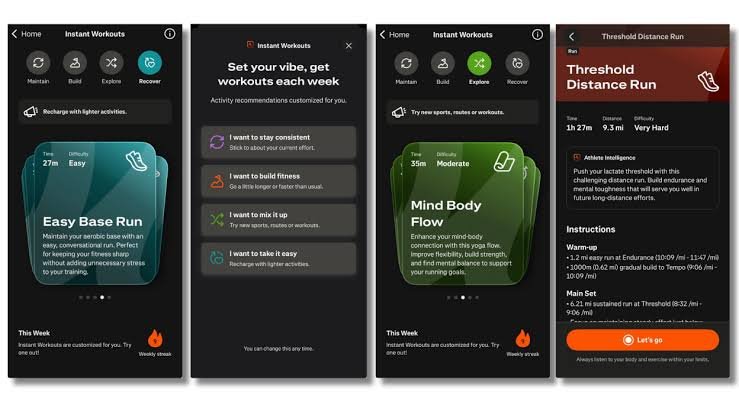
The hardest part of many workouts happens before the first step: deciding what to do. Strava’s Instant Workouts analyzes recent activity and offers subscribers recommendations across more than 40 sports. Users choose Maintain, Build, Explore or Recover and, for outdoor sessions, can receive a route generated from community activity.\n\nThat is a smart use of Strava’s position. The app knows where someone moves, what they log and which activities keep them engaged. The question is whether history alone understands enough about fatigue, injury, goals and schedule to deserve the word “workout,” rather than simply “idea.”
Four intents make the feature approachable
Maintain, Build, Explore and Recover describe purpose in ordinary language. That is friendlier than opening a library with no organizing question. The intents are also broad: “Build” can mean volume, speed, strength or skill. Strava improves the recommendation by explaining its rationale. Users should read that explanation and reject suggestions that conflict with soreness, illness or an established plan.
Route generation is the standout utility
A session that begins at the current location solves a practical problem while traveling or returning to outdoor exercise. Strava’s Heatmap reflects routes people actually use, which can beat a generic map. Popularity is not the same as safety. Conditions change, routes can be unsuitable after dark and community data may underrepresent quieter alternatives. Distance, elevation, surface and access should be checked first.
Recent history is incomplete
Uploaded activities show frequency, duration and preference. They may not show a lingering injury, a hard unrecorded job shift or another coach’s plan. Personalization becomes more credible when the athlete can state available time, equipment, pain and upcoming events. Without that context, recommendations should stay conservative and easy to dismiss.
Breadth is not equal depth
Supporting more than 40 sports does not mean the platform knows each equally well. Running guidance needs pace, terrain and recovery; strength needs movement, load and technique. Strava should explain what data informs each suggestion. Users can expect inspiration across the catalogue but should reserve coach-level confidence for recommendations with visible progression and risk controls.
Who should use it
Instant Workouts fits people who want variety or help restarting a habit. It can give experienced athletes a simple recovery option or a new route. Someone preparing for a demanding event should place it inside a structured plan, not let a feed carousel rearrange the week. Long-term value depends on consistency without random intensity.
What could change this assessment
This review assesses the released feature, not a controlled comparison with human coaching. Recommendations change with the data available and routes vary in real time. Apply local safety judgment and consult an appropriate professional when training with injury, medical conditions or high-performance stakes.
Gamehai verdict
Instant Workouts is a sensible bridge between tracking what happened and deciding what happens next. Its best role is modest: reduce decision fatigue, offer a reasoned option and get out of the way. When the stakes rise, the athlete still needs a plan that understands the whole week.
How Gamehai reached this view
Gamehai reviewed the first-party material below, separated reported facts from editorial interpretation and tested the central claim against plausible alternatives. Product reviews disclose the limits of our testing; game analysis focuses on repeatable decisions rather than treating one result as permanent proof. No company, league, team, athlete or sponsor reviewed or approved this article.