Toronto Has Days, Not Months, to Turn an Overhaul Into a System
Toronto changed the general manager, coach, goaltender and much of the supporting cast. The opening test is whether the new pieces can share one defensive language.
The Maple Leafs begin the 2026–27 season with change at almost every level. John Chayka is the general manager, Mats Sundin is advising the organization, Jim Hiller is the coach, and the incoming group includes Sergei Bobrovsky, Darren Raddysh, Emil Andrae, Gavin McKenna, Nick Paul, Jack Roslovic, Teddy Blueger, Colton Sissons and Brandon Duhaime. Days before the September 29 opener against Montreal, Auston Matthews hosted a team-bonding gathering in Arizona.
Bonding is useful. It cannot substitute for a common hockey language. Toronto went 32–36–14 last season and missed the playoffs, so the overhaul is not being added to a stable base. Hiller’s first job is to decide which rules must become automatic immediately and which ambitions can wait until the roster has experienced pressure together.
The first system should protect the middle
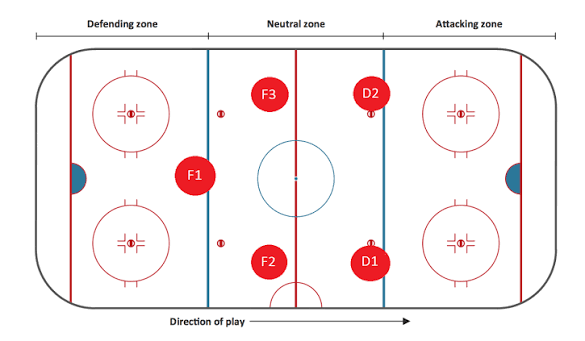
A changing roster is most vulnerable when players must make linked defensive decisions. One defender steps, the center covers, the weak-side wing collapses and the far defenseman reads whether to hold the line. If one player follows an old rule, the structure opens where NHL offenses are most dangerous.
Hiller should begin with a small number of non-negotiables around slot protection, rush sorting and defensive-zone exits. Toronto does not need every pressure rotation installed on opening night. It needs five players to recognize who owns the middle and where the relief pass will be. Complexity can be added after trust exists.
Bobrovsky changes the conversation but not the responsibility
Bobrovsky arrives with the credibility of a recent Stanley Cup run but after a season in which he went 27–23–1 with a 3.07 goals-against average and an .877 save percentage. Both parts of the résumé matter. Toronto is acquiring a goaltender who understands postseason pressure and a player whose most recent results demand support rather than mythology.
The Maple Leafs should resist using Bobrovsky’s experience as permission to defend loosely. Clean sightlines, managed rebounds and control of east-west passes will tell more about the new system than one spectacular save. If the team forces him to solve repeated lateral attacks, the overhaul has not fixed the old problem; it has only changed the person absorbing it.
McKenna needs a role that can expand
Gavin McKenna represents upside and uncertainty inside the same lineup. Toronto should avoid assigning him a role so narrow that he cannot use his creativity, or so broad that every mistake becomes evidence he is not ready. The right starting point gives him predictable linemates, a clear forecheck responsibility and touches in situations where he can make a decision with support.
His minutes should expand when his reads earn them. Power-play usage can showcase skill, but five-on-five detail will determine whether Hiller trusts him late. Watch where he begins shifts, which opponent lines he faces and whether he remains in the rotation after an error. Development is not the absence of consequences; it is a consequence that teaches the next read.
The supporting forwards suggest a matchup identity
Paul, Blueger, Sissons and Duhaime give Toronto options for defensive-zone work, forechecking and matchup minutes. Those additions can free Matthews and the most skilled forwards from beginning every important shift in disadvantageous locations. They can also create a lineup that is harder to play against without asking the stars to become different players.
The risk is overvaluing safety and building lines that cannot advance the puck after winning it. A strong defensive shift is incomplete if the team immediately returns possession. Toronto’s bottom six must connect retrievals to controlled exits and force opponents to defend. Reliability should create offense, not replace it.
Matthews’ leadership can reduce installation time
A captain-hosted gathering matters when it accelerates communication among players who will need to correct one another at speed. Matthews does not have to deliver a speech that transforms the season. He has to help establish that questions are acceptable and that the system belongs to the players once the puck drops.
On the ice, his role may include more than scoring. If Toronto wants a consistent defensive identity, its best center sets the standard for tracking, faceoff detail and changes. That example gives Hiller permission to hold every line to the same rule. Leadership becomes tactical when it removes exceptions.
New defensemen must move the puck under a shared plan
Raddysh and Andrae add different qualities, but their value depends on Toronto’s exit structure. Defensemen look slow when forwards leave the zone early and look indecisive when the first option changes every shift. The Leafs need predictable support below the puck and a clear answer when the direct exit is closed.
That may mean accepting shorter passes and fewer hopeful clearances in the opening weeks. Turnovers near the blue line will occur as players learn each other’s timing. The measure is whether the error comes from the correct idea executed late or from five players attempting different ideas. Only one of those problems improves naturally.
The season opener is a checkpoint, not a verdict
Montreal will provide emotion, pace and immediate public judgment. Toronto should still treat the game as the first live test of its rules. Watch who handles the first defensive-zone faceoff, which pair Hiller uses after an icing and how the team responds when its preferred breakout is removed.
A win can coexist with structural confusion; a loss can contain useful evidence. The coaching staff must grade the sequence, not only the result. That is difficult in Toronto, where every result becomes a larger story. It is also the discipline an overhaul requires.
What to watch in the first ten games
Track slot chances against, controlled exits and the number of times Bobrovsky must move laterally before the shot. Watch McKenna’s deployment after mistakes and whether the bottom six can turn defensive responsibility into offensive-zone time. Note whether Matthews’ line receives cleaner starting conditions because the new depth is handling harder work.
The Maple Leafs have enough new names to produce a honeymoon and enough pressure to end one quickly. The lasting improvement will come from a system players can execute when the crowd is loud, the first option is gone and no one has time to ask the bench. Toronto’s overhaul becomes real only when the roster stops looking new to itself.
How Gamehai reached this view
Gamehai reviewed the official league, team and governing-body material listed below, then separated reported facts from editorial interpretation. The analysis focuses on repeatable mechanisms—deployment, sequencing, workload, matchup and decision quality—rather than treating one result as permanent proof. No team, league, athlete, sponsor or commercial partner reviewed or approved this article.
Current-affairs analysis can change as injury information, lineups and official decisions develop. We preserve that uncertainty by identifying what evidence would strengthen or weaken the argument and by correcting material errors under our published corrections policy.