Toronto’s Kawhi Extension Is Really a Bet on Role Clarity
Toronto did not extend Kawhi Leonard to win a transaction headline. It extended him to define the hierarchy of a team that now has no excuse to drift.
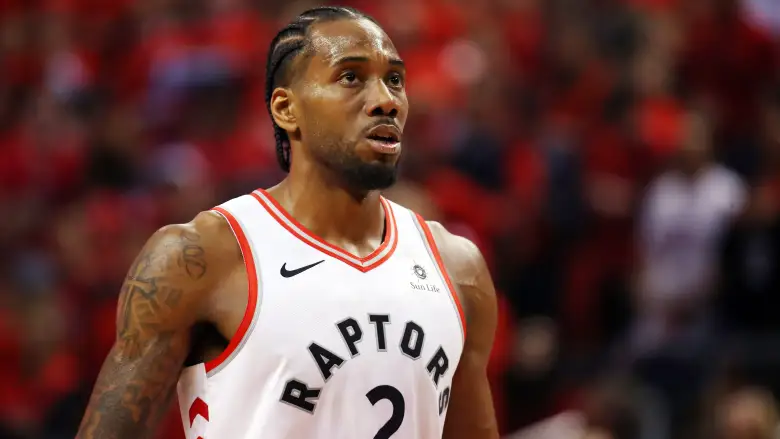
The Raptors’ multi-year extension with Kawhi Leonard is easy to understand emotionally. Leonard is again in Toronto after the September 14 transaction that brought him from the Clippers, and his first championship with the franchise still shapes how the city sees him. The harder and more useful question is what the new contract requires from the basketball operation now.
Leonard is coming off a season in which he averaged a career-high 27.9 points with 6.4 rebounds and 3.6 assists across 65 games, earned second-team All-NBA recognition, made the All-Star team and finished seventh in MVP voting. Those numbers justify treating him as an elite current player, not a ceremonial return. They also create an obligation: Toronto must construct a role that extracts his half-court value without asking his body to carry every possession.
The extension establishes an offensive hierarchy
Contending teams lose time when several good players spend the opening months negotiating who closes possessions. Leonard removes much of that uncertainty. In the half court, he is the primary option when a matchup must be attacked, a switch must be punished or a late-clock shot must be created. That does not mean he should lead every action. It means the other roles can be defined around a stable end point.
Toronto’s guards should know when their job is to create an advantage for Leonard and when his gravity has created an advantage for them. Bigs should know whether they are screening to force a switch, slipping to punish a trap or clearing a side for isolation. The extension’s first benefit is not a new play. It is eliminating ambiguity about what the offense is trying to produce in the most difficult possessions.
Workload must be designed, not improvised
Leonard played 65 games last season, enough to demonstrate sustained impact while reminding Toronto that availability is part of the performance plan. “Load management” is too vague to be useful. The Raptors need a weekly map that distinguishes travel stress, back-to-backs, high-minute games and the cumulative cost of defending large creators.
The goal should not be to reduce every number. It should be to spend Leonard’s highest-intensity minutes where they change the team’s ceiling. That may mean shorter first-half stretches, more possessions as an off-ball threat and selective defensive assignments before he takes the opponent’s best wing late. A contract of this size should buy a system around the player, not an expectation that the player will solve a poor system.
Toronto needs movement around a deliberate star
Leonard’s pace can look methodical because he is comfortable reaching a preferred spot and waiting for the defender to reveal leverage. Teammates cannot mistake that patience for permission to stand. The floor should remain active behind his matchup: cutters crossing when help turns its head, shooters relocating one pass away and screeners changing the angle before the double-team arrives.
The Raptors should aim for a productive contradiction. Leonard can slow his individual matchup while the other four players keep the possession moving. That makes the eventual decision cleaner. If defenders stay home, he attacks one-on-one. If they stunt, the ball leaves early to a teammate who already knows the next pass. The extension becomes far more valuable when his isolation skill organizes collective offense rather than replacing it.
Defensive value depends on assignment discipline
Leonard’s reputation was built partly on defense, but Toronto should not use the reputation as a reason to give him the hardest chase assignment every night. The best use may be to place him on a strong wing whose actions keep him near the play without forcing him through endless screens. From there he can switch selectively, disrupt a passing lane and become the primary stopper when the game demands it.
This is roster strategy as much as coaching. The Raptors need perimeter defenders who can absorb the fastest guard and bigs who can keep the coverage from collapsing at the rim. If Leonard must erase too many first-line mistakes, the offensive bargain changes. Preserving him is not hiding him. It is assigning his defensive intensity to the possessions where it has the highest return.
The roster timeline cannot become sentimental
A reunion can tempt a franchise to behave as if the story itself is the strategy. Toronto cannot do that. Leonard’s current production places the team in a competitive window, and the front office must judge the roster by how well it supports that window. Shooting, secondary creation and durable two-way depth have more value now than vague future flexibility that never becomes a coherent team.
That does not require reckless spending or sacrificing every young player. It requires honesty about redundancy. A prospect who needs the ball in the same locations as Leonard may be less useful than a lower-usage player who defends, cuts and makes a quick decision. The extension should sharpen Toronto’s evaluation criteria. Every move now answers a clear question: does this help Leonard-led lineups win four playoff rounds?
The risk is concentration, not only health
Health will dominate the public conversation, but the strategic risk is broader. When a team builds too much of its identity around one deliberate scorer, the offense can become predictable against aggressive playoff coverages. Opponents may send the double-team earlier, deny the preferred catch or force Leonard to make repeated passes rather than repeated shots. Toronto needs a second route to efficient offense before that test arrives.
The solution is not another player demanding equal control. It is a secondary structure—transition pressure, movement shooting, a reliable two-man action—that can punish the coverage Leonard attracts. The Raptors should be able to win a quarter because he scored 12 points and another because the defense’s reaction created 12 points for teammates.
What to watch in the first month
Watch Leonard’s touches, but pay closer attention to where they begin. Catches at the elbow or on the move require less physical work than repeated dribble-ups against a set defense. Track which teammates close games, which defender receives the toughest guard assignment and how often Toronto generates a quality shot after Leonard is doubled.
If those answers become clear quickly, the extension will have given Toronto more than elite scoring. It will have created a stable language for the roster. If the team still looks like several timelines and several offensive identities sharing a uniform, the contract will have preserved a great player without yet building a convincing contender around him.
How Gamehai reached this view
Gamehai reviewed the official league, team and governing-body material listed below, then separated reported facts from editorial interpretation. The analysis focuses on repeatable mechanisms—deployment, sequencing, workload, matchup and decision quality—rather than treating one result as permanent proof. No team, league, athlete, sponsor or commercial partner reviewed or approved this article.
Current-affairs analysis can change as injury information, lineups and official decisions develop. We preserve that uncertainty by identifying what evidence would strengthen or weaken the argument and by correcting material errors under our published corrections policy.