Kansas City’s 3–0 Start Is Being Held Together by Play Action
Kansas City has rediscovered a clean way to make defenders hesitate. The question is whether the Chiefs can preserve it when opponents stop honoring the run.
A 24–10 victory over Miami moved Kansas City to 3–0, but the Chiefs’ most important number was smaller and more revealing: Patrick Mahomes completed 11 of 12 passes for 183 yards and a touchdown when the offense used play action, according to Next Gen Stats cited by the NFL. That was not decorative misdirection. It was the organizing mechanism of the passing game.
Play action is sometimes reduced to a quarterback turning his back to the defense. Its real value is relational. The run look changes linebacker depth, slows a pass rusher’s first step, forces safeties to respect an interior gap and gives route combinations a fraction more room. Kansas City used those fractions to produce a controlled passing game even while coaches and players acknowledged that the overall operation still needs cleaning.
The Chiefs are buying clarity before the throw
Mahomes has always been capable of solving a defense after the snap. The play-action success against Miami showed the value of solving part of the picture before he has to improvise. A linebacker who steps toward the line widens the window behind him. A safety who pauses cannot overlap a crossing route at full speed. A defensive end who squeezes the run action gives the quarterback a cleaner edge.
That clarity is especially valuable for an offense integrating weekly changes around Mahomes. The quarterback does not need the fake to fool all 11 defenders. He needs it to alter one key player long enough for the concept to declare itself. Eleven completions on twelve attempts suggests the Chiefs repeatedly found that player and gave Mahomes an answer on schedule.
A credible run threat matters more than rushing volume
Play action does not require an elite rushing attack, but it does require the defense to respect the presentation. Kansas City’s formations, backfield tracks and line movement must resemble plays the Chiefs are actually willing to run. If the run look becomes theater, second-level defenders will retreat directly to their passing landmarks and the windows will close.
The key metric over the next month is not simply yards per carry. It is whether Kansas City can force a defense to fit the run with the same personnel it uses to defend the pass. Efficient early-down carries, occasional perimeter stress and the quarterback’s own movement can keep that conflict alive. The Chiefs need enough evidence on tape that ignoring the backfield becomes a dangerous choice.
Play action protects the offensive line differently
The fake also changes the terms of pass protection. Linemen can fire with run posture rather than immediately retreating, while edge defenders must process the mesh point before committing. That pause will not erase a protection weakness, but it can reduce the number of snaps in which a blocker must survive a transparent, long-developing dropback.
Kansas City should resist turning this into a predictable sanctuary. If every deep or intermediate concept arrives with the same backfield action, opponents can pressure the point where Mahomes resets or drop an edge player into the expected window. The answer is variation from identical pictures: run, screen, boot, quick throw and shot play. The disguise is strongest when the first second of every option looks alike.
The explosive plays can come from patience
Mahomes’ reputation invites defenses to protect against the spectacular. A sound play-action game punishes that caution without requiring the quarterback to force the ball deep. A crosser catching the ball with space can create an explosive gain after the reception. A tight end holding the middle can open a route behind the corner. The offense can be aggressive in design and patient in decision.
That balance is important because Kansas City does not need to turn every possession into a referendum on Mahomes’ creativity. The more often the structure provides a clean throw, the more energy the quarterback can reserve for the third downs and late-game snaps when structure fails. A less dramatic offense can make its most dramatic player more dangerous.
The Miami result also contained a warning
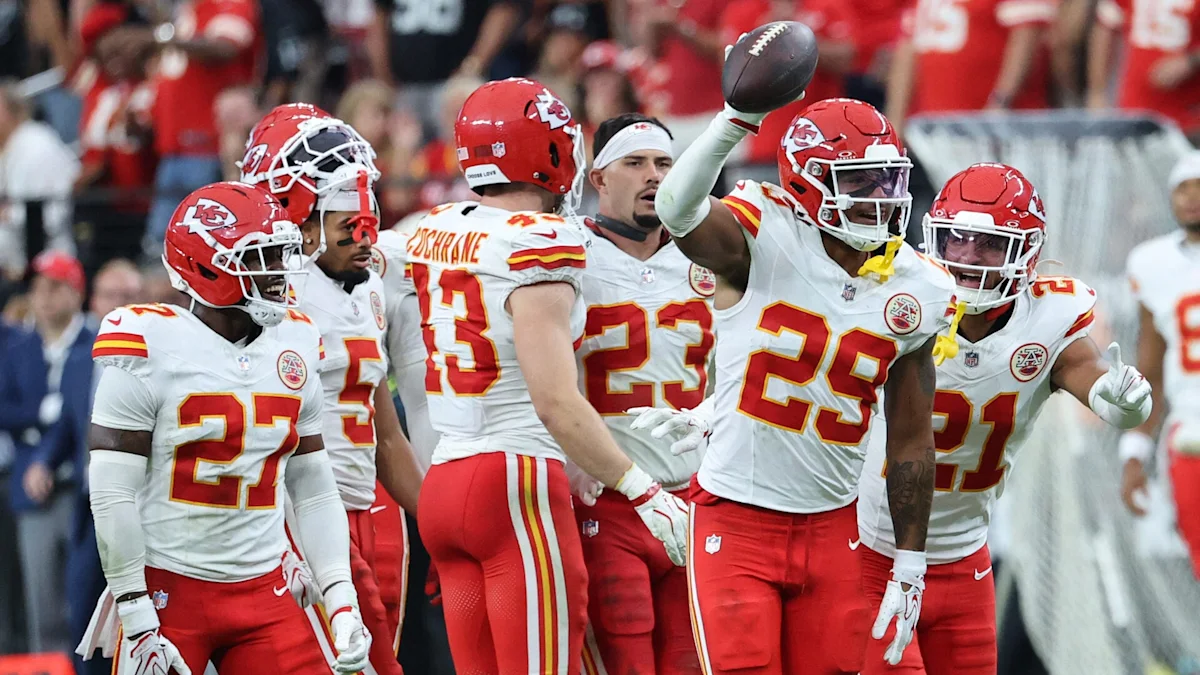
The Chiefs left the game saying the mood at 3–0 is positive while the film remains imperfect. That distinction should survive the standings. September wins can conceal operational problems because opponents have less tape, new combinations are still settling and one successful mechanism can cover several weaker areas. George Karlaftis’ first career interception and a defense that held Miami to ten points reduced the pressure on every offensive possession.
If Kansas City is repeatedly depending on elite play-action efficiency to stay on schedule, defenses will eventually build the weekly plan around removing it. They can exchange responsibilities at the second level, pressure from the side of the fake or force the offense into empty formations where the run illusion disappears. The Chiefs need a counter before the opponent makes the first answer obvious.
The next layer should be constraint, not novelty
The best addition is not necessarily a new play. It is a constraint that punishes how defenses respond to the existing one. If linebackers gain depth sooner, Kansas City can hand the ball off or throw underneath. If safeties drive the crossing routes, the offense can send a receiver behind them. If the edge waits for Mahomes on the boot, the back can cut into the vacated lane.
This is where Andy Reid’s sequencing has always mattered. A good call wins a snap. A good sequence makes the defense wrong across several snaps because the same clue leads to different outcomes. The Miami film gives Kansas City a persuasive opening argument. The next month will show whether the Chiefs have prepared the rebuttal.
What to watch next
Track play-action usage by down and personnel, not only its completion percentage. If the Chiefs can call it from multiple formations and pair it with legitimate runs, the efficiency has a sturdy foundation. Watch the depth of Miami-style linebackers on future tape: an early retreat will signal that opponents are prioritizing the intermediate pass over the run.
Also watch what happens when Kansas City reaches obvious passing downs, where the fake carries less weight. A championship offense must win when the defense no longer has to hesitate. The 3–0 start shows that the Chiefs have found a powerful lever. It does not yet prove that they can move the defense after everyone knows where that lever is.
How Gamehai reached this view
Gamehai reviewed the official league, team and governing-body material listed below, then separated reported facts from editorial interpretation. The analysis focuses on repeatable mechanisms—deployment, sequencing, workload, matchup and decision quality—rather than treating one result as permanent proof. No team, league, athlete, sponsor or commercial partner reviewed or approved this article.
Current-affairs analysis can change as injury information, lineups and official decisions develop. We preserve that uncertainty by identifying what evidence would strengthen or weaken the argument and by correcting material errors under our published corrections policy.