New England Beat Buffalo by Changing the Picture Before the Snap
The Patriots did not suddenly become perfect in Buffalo. They became harder to diagnose, and that was enough to give Drake Maye cleaner football.
New England’s 29–26 win at Buffalo can be told as a redemption story for Drake Maye. After an uneven opening month, he threw for 269 yards and three touchdowns, added 54 rushing yards and completed the late throws that kept the ball away from Josh Allen. That version is emotionally accurate. The tactical version begins before Maye received the snap.\n\nThe Patriots used motion on 75.3 percent of their plays, according to NFL Next Gen Stats, up from 56.1 percent through the first three weeks. They produced a season-best 49.3 percent success rate, 405 yards and 26 first downs. Motion did not erase two turnovers or every missed throw. It changed the information available to the quarterback and made Buffalo declare more of its intentions.
Motion forced an answer
When a receiver crosses the formation, the defense must communicate, bump a zone responsibility or send a defender with him. No response guarantees man or zone, but each supplies evidence. New England paired the movement with concepts that punished the adjustment, allowing receivers such as Romeo Doubs to reach favorable matchups instead of asking Maye to rescue static formations.
Maye still had to finish the play
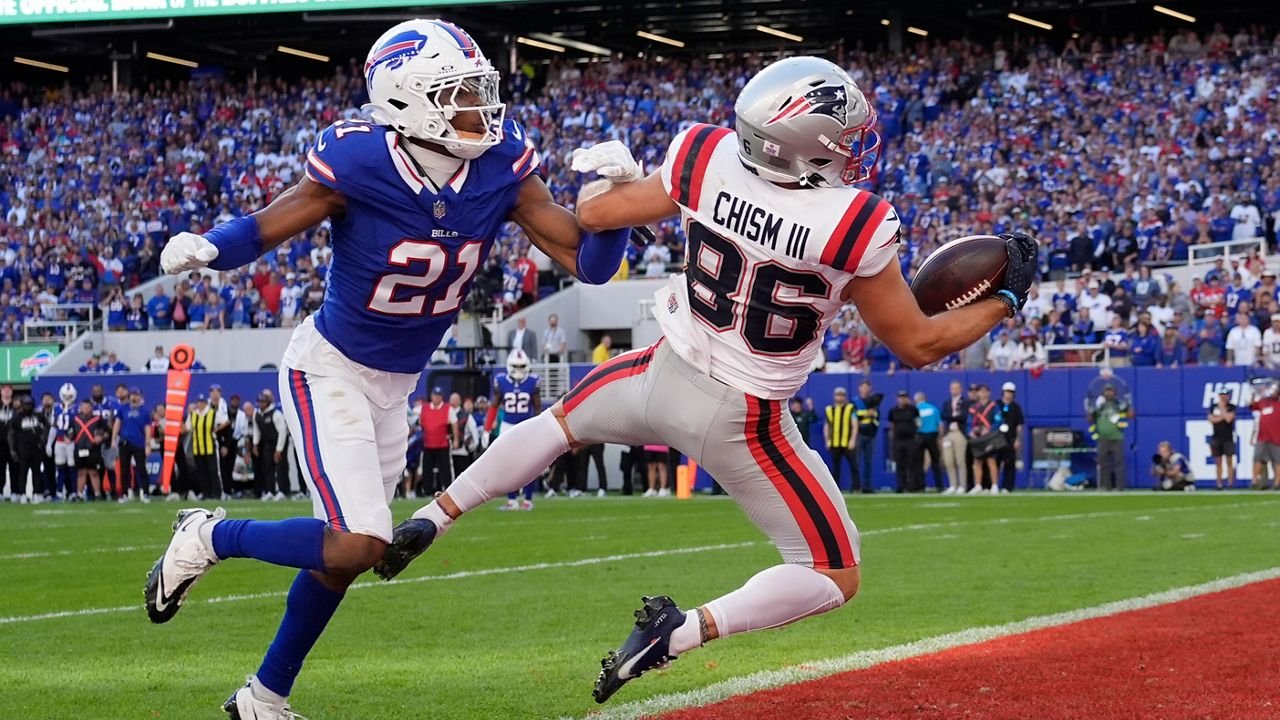
His 22 completions on 37 attempts show that the offense was not effortless. Maye lost a fumble, threw an interception and missed chances. Yet eight scrambles converted pressure into 54 yards, and the late touchdown to Efton Chism required placement beyond the scheme. Motion did not play quarterback for him; it reduced the number of snaps on which he had to solve everything after the snap.
Long drives exposed Buffalo
The Bills created two takeaways and Gregory Rousseau affected the game, but Buffalo forced only two three-and-outs and allowed four drives of at least eight plays. New England repeatedly found the next modest answer, keeping the full playbook available and wearing down the communication needed to handle movement. The Patriots did not live on one explosive mismatch; they made Buffalo defend a sequence.
The final call showed earned trust
After the defense intercepted Allen, New England could have drained time with cautious runs. Instead, the Patriots called passes. Maye missed the first and found Hunter Henry for the first down that ended the game. The decision matched the evidence: the passing structure had answers and Buffalo struggled to leave the field. Aggression here was a matchup conclusion, not a slogan.
The counter is coming
Future opponents will preserve disguise with late rotations, exchanged responsibilities and pressure near Maye’s reset point. New England must use the same initial movement to reach runs, screens, quick throws and shots so the shift cannot identify the concept. The lasting improvement will be multiplicity, not simply a higher motion rate.
What could change this assessment
One successful game does not prove the Patriots solved their offense. Buffalo’s defense has allowed too many sustained drives, and two New England turnovers would have been fatal against a cleaner opponent. Scrambling can also extend a possession while hiding protection or route problems that return later.
Gamehai verdict
The upset moved New England to 2–2 and back into the AFC East conversation because the Patriots changed the decision environment for their quarterback. Motion opened the door in Buffalo. Sequencing will decide whether it stays open after defenses prepare for it.
How Gamehai reached this view
Gamehai reviewed the first-party material below, separated reported facts from editorial interpretation and tested the central claim against plausible alternatives. Product reviews disclose the limits of our testing; game analysis focuses on repeatable decisions rather than treating one result as permanent proof. No company, league, team, athlete or sponsor reviewed or approved this article.