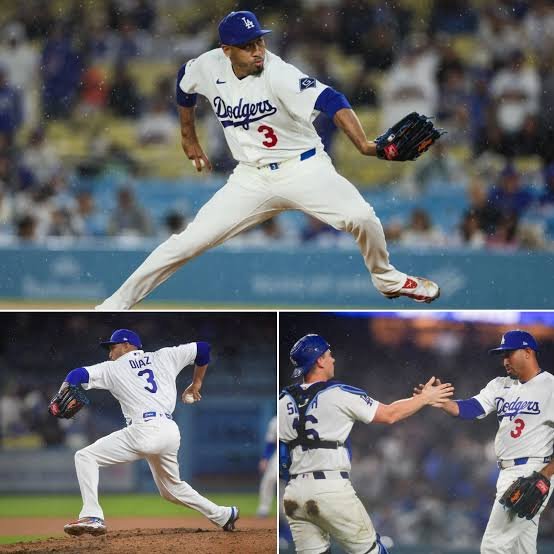
The Dodgers’ 3–1 Win Was Really a Bullpen Trust Test—and Edwin Díaz Passed
The save mattered because Los Angeles was not merely protecting two runs. It was testing whether its most expensive bullpen answer could again handle the last three outs.
Edwin Díaz entered the ninth inning of NLDS Game 3 with a two-run lead and months of uncertainty behind him. The Dodgers had signed him for three years and $69 million to anchor the bullpen, but injuries, an 11.85 ERA and four blown saves in 16 regular-season appearances forced the club to rebuild his role. When Ozzie Albies opened the ninth with a 104.4 mph double, the uncertainty returned immediately.\n\nDíaz retired the next three hitters, stranded Albies and secured a 3–1 victory that gave Los Angeles a 2–1 series lead over Atlanta. The save was his first since August 14. More importantly, it showed what postseason bullpen trust looks like: not the absence of stress, but maintaining the plan after stress arrives.
Leverage was rebuilt one outing at a time
The Dodgers did not return Díaz directly to the ninth. Five scoreless appearances late in the regular season provided lower-risk evidence. A perfect Game 2 inning, featuring triple-digit fastballs and two strikeouts, added postseason evidence from the sixth. Role restoration should follow pitch quality and recovery, not the reputation attached to a contract. Dave Roberts used Game 3 because the recent process supported it.
The double changed the task, not the identity
With Albies at second and a two-run margin, Díaz could prioritize outs over the runner. An eight-pitch groundout moved Albies to third but reduced Atlanta to two outs. A foul fly and a difficult grounder ended the inning. The sequence showed situational discipline: protect the lead, keep attention on the hitter and accept an exchange that shortens the inning.
Velocity restored the arsenal’s shape
In Game 2, Díaz reached 100.8 mph and paired the fastball with a sharper slider. Speed reduces decision time, but the relationship between pitches matters more. A fastball threatening the upper zone makes the slider appear longer on a similar initial path. When Díaz lacked his best physical base, hitters could narrow the problem. This version again asks them to cover two outcomes.
The ninth should stay flexible
One save should not force Roberts to name a permanent closer. Tanner Scott and other relievers give Los Angeles matchup options, and the postseason schedule changes availability daily. Díaz may be most valuable against hitters whose swing paths match the fastball-slider combination, whether they appear in the eighth or ninth. Trust does not require ceremony.
Recovery is the next test
Postseason relievers warm repeatedly, work on consecutive days and enter with runners aboard. Díaz has dealt with elbow surgery and neck inflammation, so the Dodgers must watch how his command and velocity hold after each workload. One clean reading is encouraging; sustainable availability turns a good outing into a bullpen solution.
What could change this assessment
The ninth included hard contact immediately, and three outs cannot erase the regular-season volatility. Atlanta may adjust by hunting the fastball or refusing sliders below the zone. Defensive execution mattered on the final ground ball. The save proves Díaz can handle this moment, not that every future matchup should belong to him.
Gamehai verdict
Game 3 was a trust test because the Dodgers gave Díaz a real consequence and watched him solve the inning after the script changed. His response expanded their late-game options. The strongest conclusion is not that the closer is permanently back; it is that Los Angeles no longer has to organize October around his absence.
How Gamehai reached this view
Gamehai reviewed the first-party material below, separated reported facts from editorial interpretation and tested the central claim against plausible alternatives. Product reviews disclose the limits of our testing; game analysis focuses on repeatable decisions rather than treating one result as permanent proof. No company, league, team, athlete or sponsor reviewed or approved this article.