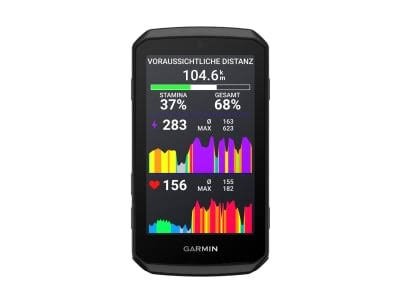
Garmin Edge 1060 Analysis: Voice Control Is Useful Only If It Keeps a Rider’s Eyes Up
The Edge 1060’s headline feature is not another data field. It is an attempt to move common mid-ride decisions away from a touchscreen and back into the rider’s voice.
Cycling computers have spent years becoming more capable and more demanding. A modern head unit can route around trouble, display a workout, connect a radar, coordinate a group and preserve enough battery for an all-day ride. The contradiction is obvious: the more the device can do, the easier it becomes to look down when the road deserves full attention. Garmin’s new Edge 1060 addresses that tension with a microphone, speaker and the wake phrase “Okay, Garmin.” Riders can request a stat, start navigation, report a pothole or send a voice message without reaching for the screen.\n\nThat is a meaningful design direction, but it is not automatically a safety breakthrough. Voice systems fail differently from buttons. Wind, traffic, accents and group noise can reduce recognition, and a misunderstood routing command can be more disruptive than one deliberate tap. This analysis treats Garmin’s specifications as claims to be evaluated, not laboratory results. The important question is whether the Edge 1060 makes frequent decisions simpler while leaving high-consequence decisions visible and confirmable.
Hands-free is a safety hypothesis, not a guarantee
The strongest use cases are short and verifiable: read heart rate, report a pothole, repeat the next turn or find a nearby stop. Each replaces a glance-and-tap sequence with a command whose result can be heard. The weakest use cases are open-ended. Choosing between several routes or changing a detailed workout still benefits from a screen and a stopped bike. Garmin should make confirmation proportional to consequence so a mistaken coffee-shop search is easy to cancel and a reroute never happens ambiguously.
The repeatable mechanism is to move low-complexity commands away from the touchscreen while keeping navigation, workout and safety information available at a glance. That sentence matters because it converts an attractive result or specification into a process that can be inspected. Readers should ask which part is controlled by the athlete or team, which part depends on the opponent or environment, and which part is simply variance. A serious conclusion survives that separation. A weak conclusion relies on the final score, the biggest product claim or one spectacular clip.
Execution also has an opportunity cost. Time, attention, recovery, money and roster roles are finite. Leaning further into this idea means doing less of something else. Coaches and consumers should name that trade before judging success. If the approach works only when every surrounding condition is favorable, it is not yet a dependable strategy; it is a useful option waiting for a broader test.
Buttons still matter in bad weather
Garmin kept physical controls alongside the touchscreen, a practical choice for gloves, rain, rough surfaces and fatigue. Voice should be a third control mode rather than a fashionable replacement. The best interface lets the rider use touch during setup, buttons under predictable stress and speech for brief requests. Consistency matters more than novelty: a rider should not need to remember a different command grammar when oxygen debt is high.
The best evidence will come from the uncomfortable version of the problem. A strong mechanism should remain visible when the first option is removed, the opponent changes the matchup, the connection drops or fatigue alters technique. In this case the key test is whether the voice interface reduces visual demand without encouraging riders to issue complex commands in unsafe moments. That question is intentionally harder than asking whether the latest result looked impressive. It asks whether decision quality improved.
Film, sensor data and public statistics answer different parts of that question. None should be treated as complete. Numbers describe frequency and outcome; video explains spacing and sequence; participant feedback reveals usability and preparation. The most reliable evaluation triangulates all three and states clearly when one form of evidence is missing.
Navigation is becoming participatory
The device can suggest surfaces and points of interest while riders report hazards such as potholes. That creates a potentially valuable feedback loop, but only if reports are timely, de-duplicated and resistant to casual errors. A hazard layer that cries wolf becomes another overlay people ignore. Garmin should show how reports age, how corroboration works and whether municipalities or other riders can benefit from the information.
Context should travel with every statistic. Score state, opponent quality, available personnel, venue, recent workload and sample size can turn the same number into a different story. That is especially important here because voice recognition may become unreliable in wind or traffic, and riders may spend more attention correcting a failed command than a familiar button would require. Acknowledging that limitation does not weaken the analysis. It prevents the useful claim from expanding beyond what the evidence can carry.
The practical response is to set a review window before emotions settle into certainty. Compare the next several games or sessions against the same mechanism, document adjustments and look for performance in ordinary conditions. A strategy becomes part of identity when it improves the floor of performance, not merely when it helps produce one memorable ceiling.
Training features need a clear hierarchy
An interactive workout screen, Garmin Coach plans and recovery information from compatible wearables give the 1060 a broad training role. The hierarchy should remain simple during hard intervals: target, current output, time remaining and the next step. Deeper interpretation belongs after the ride. A premium computer earns trust by hiding secondary detail at the right moment, not by proving how much data it can display.
Readers can follow this story without access to a private analytics department. Track recognition accuracy outdoors, route-confirmation behavior, glove usability, real battery life and whether incident-reporting data remains useful after launch. Those indicators connect the visible outcome to the decisions underneath it. They can also expose when a promising story is being held up by finishing luck, unusually favorable competition or a measurement system that is too sensitive to noisy inputs.
Watch the response, not only the repetition. Opponents and users learn. The second encounter usually removes novelty and targets the most obvious dependency. If the subject can reach the same goal through a different alignment, control method or sequence, the original idea is becoming robust. If performance collapses once the first route closes, the early success still taught something—but it did not establish a durable edge.
Price makes the ecosystem part of the review
At a suggested $799.99, the purchase is difficult to judge in isolation. Its value rises for riders already using Garmin watches, Varia lights or Garmin Connect and falls for those who would need to rebuild an ecosystem. Up to 20 hours in demanding use and 60 hours in battery-saver mode are promising specifications, but real endurance depends on screen brightness, sensors, navigation, temperature and connectivity. Buyers should compare their longest realistic ride, not the biggest number on the box.
The human factor is not a soft add-on. Athletes must recognize cues under pressure, coaches must communicate the adjustment, and product users must understand what the device is asking them to do. A theoretically optimal plan that arrives too late or requires too much attention can be worse than a simpler plan executed consistently. The relevant design target is usable intelligence.
That is why the central decision remains whether the voice interface reduces visual demand without encouraging riders to issue complex commands in unsafe moments. The answer should be based on behavior over time, not on a launch-day impression. Look for fewer avoidable decisions, clearer roles and a more reliable next action. Those changes are less dramatic than a headline number and more likely to create lasting value.
What would disprove the argument
The strongest counterargument is that voice recognition may become unreliable in wind or traffic, and riders may spend more attention correcting a failed command than a familiar button would require. That possibility deserves an explicit place in the evaluation. Too much sports analysis declares a trend and waits for confirming evidence; too much product coverage repeats a specification and calls it a benefit. Gamehai uses the opposite discipline: state the alternative, identify what it would look like and revise the conclusion when the observed behavior fits it better.
Disproof may arrive gradually. A strategy can remain sound while execution fails, and a product can be well designed for a narrower audience than its campaign suggests. We will separate those cases. The question is not whether every result turns positive. It is whether the proposed mechanism continues to improve the decisions available under realistic conditions.
The next evidence that matters
The most useful follow-up is not another headline. It is a consistent record of recognition accuracy outdoors, route-confirmation behavior, glove usability, real battery life and whether incident-reporting data remains useful after launch. Those observations should be collected across several relevant samples, with the surrounding conditions preserved. Changes in opponent, health, setup or role should be noted instead of treated as noise to be discarded.
Pay special attention to adjustment speed. Elite competition and mature technology ecosystems do not remain static. Rivals change coverage and protection; athletes change pacing; software changes its model; users adapt their habits. The durable advantage belongs to the system that notices the new problem and reaches a workable second answer without abandoning its core purpose.
How Gamehai reached this view
Gamehai reviewed the first-party reporting and product information linked below, separated reported facts from editorial inference and tested the central argument against a plausible alternative. No league, team, player, coach or manufacturer reviewed this article. Product pieces are specification-based editorial analyses unless hands-on testing is explicitly stated; they should not be read as laboratory validation, medical advice or a guarantee of performance.
Our standard is usefulness rather than certainty. We explain the mechanism, the cost, the counterargument and the evidence readers can watch next. When an official source corrects a fact or later evidence changes the conclusion, the article should be updated with a visible correction or clarification.
Gamehai verdict
The current evidence supports a focused conclusion: move low-complexity commands away from the touchscreen while keeping navigation, workout and safety information available at a glance. The promise is credible because it connects a visible result with a decision process. The limit is equally important: voice recognition may become unreliable in wind or traffic, and riders may spend more attention correcting a failed command than a familiar button would require.
For now, the practical test is whether the voice interface reduces visual demand without encouraging riders to issue complex commands in unsafe moments. Readers should return to that question after the next meaningful sample. If the process remains clear when the easy conditions disappear, this development will matter beyond the ten-day news cycle. If it does not, the first result was still informative—but smaller than the headline.