DeMar DeRozan and Nikola Jokić: The Half-Court Plan Behind Denver’s New Look
Denver’s DeRozan plan is not about adding another star name. It is about giving Nikola Jokić a different answer when playoff possessions slow down.
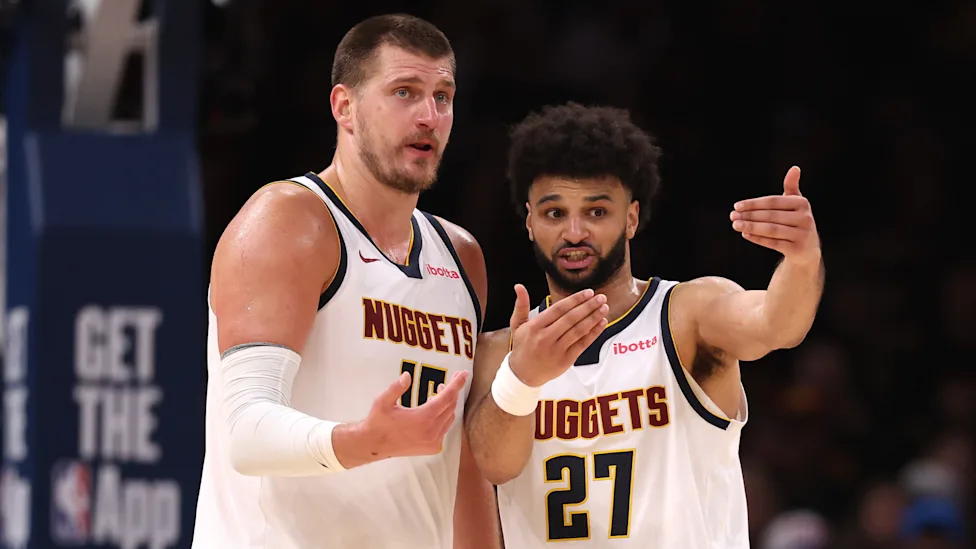
Nikola Jokić makes difficult offensive fits look simple because he reads the floor before most defenders finish making a decision. DeMar DeRozan presents a particularly interesting test of that gift. DeRozan is one of the league’s most comfortable midrange creators, a patient footwork scorer who prefers operating inside the arc. Denver’s offense is at its best when cutters, shooters and the ball move around Jokić. Put those ideas together carelessly and the lane can become crowded. Put them together with purpose and the Nuggets gain a late-clock scorer who attacks the exact spaces defenses often concede to protect the rim and three-point line.\n\nThe fit is therefore not a question of whether two intelligent players can share the ball. They can. It is whether Denver can arrange the other three players—and the timing of every cut—so that DeRozan’s preferred zones remain an advantage instead of a traffic jam.
The elbow can become a two-man control room
Jokić and DeRozan can initiate offense from either elbow, forcing defenders to guard handoffs, back cuts and quick entries from the same shape. DeRozan is dangerous when he receives the ball with a defender trailing because he can stop, pivot or draw contact before the help is set. Jokić is dangerous when that help arrives because he finds the abandoned cutter. Denver should use the pairing as a sequence: DeRozan cuts through, re-screens or circles back rather than parking next to the post. The constant exchange can turn two midrange preferences into an organized passing hub.
Staggering minutes may matter more than starting labels
The easiest way to maximize DeRozan is to give him stretches without Jokić, when his shot creation can stabilize bench units. That does not mean minimizing their shared minutes; it means ensuring Denver always has a creator who can reach a reliable spot. A stagger also reduces the pressure on backup ball handlers and keeps late-clock possessions from dissolving into improvisation. Coaches should evaluate lineup performance by role clarity: who initiates, who spaces, who screens and who defends the most demanding perimeter matchup. The first five names announced are less important than the combinations that bridge quarters.
Three-point volume is a lineup responsibility
DeRozan does not need to become a high-volume three-point shooter for the fit to work, but the lineups around him cannot ignore arithmetic. Denver should pair the duo with credible movement shooters and a guard willing to attack closeouts. When DeRozan handles, Jokić can space above the break or screen into a short roll, pulling a center away from the rim. When Jokić posts, DeRozan should cut decisively or occupy the weak-side nail only long enough to become a release valve. Hesitation is what shrinks the floor. Quick role changes can keep it wide enough.
Late-game offense is the reason to accept discomfort
Playoff defenses eventually remove first options. They switch actions, crowd Jokić’s catches and dare another player to create against a set floor. DeRozan offers a possession that does not require a perfect advantage: he can work from the elbow, use a screen or create separation with footwork. That raises Denver’s floor in the final minutes. The trade-off is that the Nuggets must still preserve Jokić as the decision-maker. DeRozan’s best late-game role may be to attack the second-best perimeter defender after Jokić forces the initial coverage change.
The strongest counterargument
The defensive fit could decide whether the offensive benefit survives. Opponents may involve DeRozan repeatedly in screening actions, while non-shooting lineups could allow help defenders to sit in the lane. Denver cannot solve those problems with reputation. It needs disciplined matchups, strong low-man rotations and enough shooting around the pair to punish aggressive help.
What to watch next
The best checkpoint is not a single scoring average. Watch the shape of possessions: where the first advantage begins, how often the defense sends a second defender and whether the weak-side player receives the ball with time to act. Lineup data becomes more useful when paired with film showing who bends the coverage and who merely benefits from it. Late-clock possessions will reveal whether the proposed fit creates another dependable solution or simply moves the same problem to a different spot.
Opponents will test the idea by switching, shrinking the floor and making the weakest shooter or defender decide the possession. The coaching response should be visible in screening angles, off-ball movement and substitution patterns. Gamehai will judge the strategy across several matchup types rather than a short winning streak, with particular attention to half-court efficiency, turnover pressure, shot quality and the minutes when the primary star rests.
A useful re-evaluation should preserve the conditions around the evidence: opponent quality, score state, available personnel and the choices that created the result. Without that context, a promising trend can become a conclusion too quickly. We will compare the next sample with the mechanism described above, not merely with the final score or headline number. That approach gives readers a clear test for whether the original argument is strengthening, weakening or being replaced by a better explanation.
How Gamehai reached this view
Gamehai reviewed the primary reporting and official material linked below, then evaluated the subject through role, spacing, decision-making, roster construction and repeatable process. We distinguish confirmed facts from our analysis, avoid treating a short sample as a permanent trend and update material errors when better information becomes available. This is independent editorial analysis; no team, league, product maker or commercial partner reviewed or approved the conclusion.
Readers should treat tactical projections as informed scenarios rather than guarantees. Coaching choices, health, opponent adjustments and new regulatory decisions can change the outcome. Our standard is to explain what evidence supports the current view, what could invalidate it and what to watch next.
Editorial bottom line
Denver is relying on the idea that postseason possessions require more than one kind of answer. Jokić remains the system; DeRozan becomes a pressure release when the system meets a set defense. If the Nuggets manage spacing through movement and stagger the creators intelligently, the pairing can be more complementary than its shot charts first suggest.