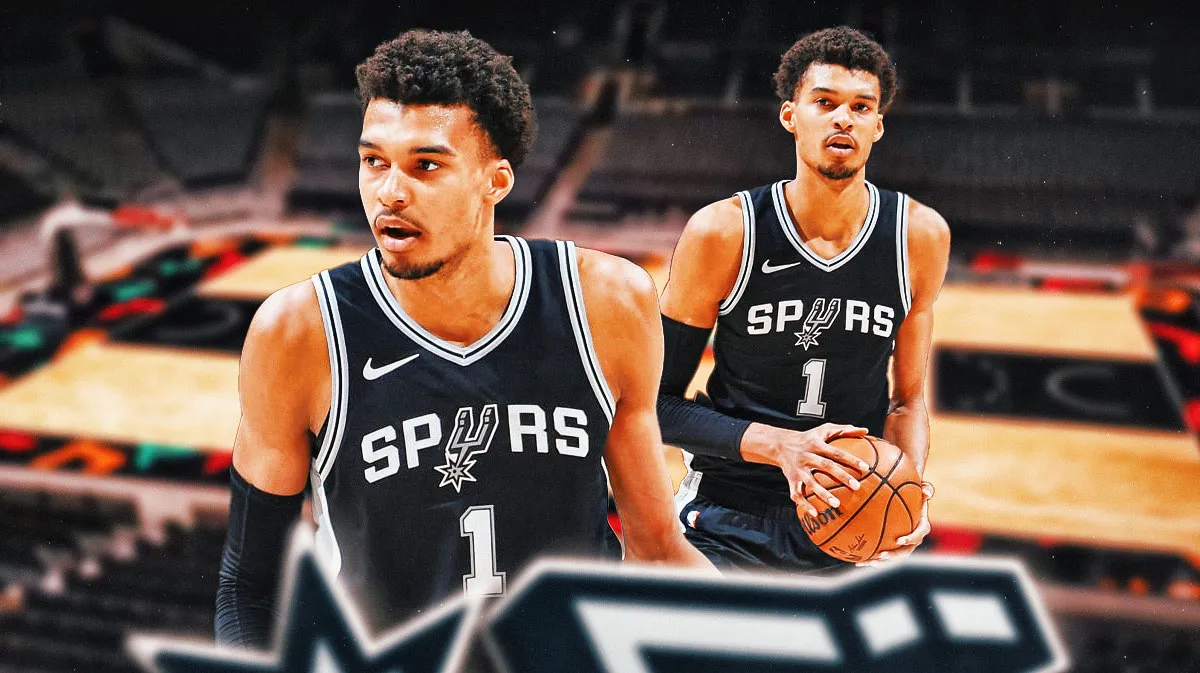
What San Antonio’s Finals Loss Revealed About the Wembanyama Blueprint
The Spurs did not leave the Finals with a broken blueprint. They left with a sharper list of the possessions Victor Wembanyama should not have to rescue.
San Antonio’s run to the 2026 NBA Finals accelerated every question around Victor Wembanyama. His reach can change a defense before the opponent enters the paint, and his offensive range lets the Spurs build actions unavailable to most teams. New York’s five-game victory also showed where possibility still needs structure.\n\nA giant creator can make a bad possession look survivable, which is both a gift and a danger. The Spurs’ next step is to make the ball arrive at Wembanyama’s advantage earlier, give him a second creator who can punish loaded coverage and ensure the weak side does not become an invitation to crowd the lane.
Entry quality changes everything
A catch at the elbow or on the move creates options; a static catch pushed away from the lane asks Wembanyama to solve a set defense. Screen angle and pass timing should be treated as primary actions. Half-court possessions reveal the mechanism better than raw points. Watch where the first advantage is created, which defender supplies help and whether the pass reaches the weak side before the floor resets. A lineup can post a good rating for reasons that will not survive the playoffs; the geometry of the possession is the stronger evidence.
Five-out spacing needs movement
Standing around a shooting big is not enough. Guards must cut behind top-locks and screen for one another so the defense cannot keep every helper facing the ball. The clean analytic split is by lineup, opponent coverage and shot-clock band. Results in transition do not answer the same question as a possession beginning with eight seconds left. Evaluating Spurs Wembanyama Finals blueprint means identifying which combinations generate paint pressure, rim attempts, free throws and open threes without paying for them with turnovers.
A second creator should attack the rotation
The ideal partner does not duplicate every touch. He punishes the first help, reaches the paint against a moving defense and can run the offense when Wembanyama rests. Spacing is a responsibility shared by five players. A non-shooter can still create room through screening, cutting and quick decisions, while a respected shooter can damage an action by standing in the wrong place. The fit should be judged by the timing of movement and the quality of the next pass rather than labels attached to positions.
Defensive coverage can remain varied
Wembanyama can play at the level, switch selected actions or protect the rim. San Antonio should use that versatility to change the question rather than make him execute the same coverage every possession. Playoff opponents will switch, top-lock movement, shrink from a weaker shooter and make a secondary creator finish the possession. The proposed solution is credible only if it carries an answer to at least two of those counters. That is why role clarity and a second action matter as much as the opening set.
Rebounding completes the size advantage
A spectacular contest loses value when the offense retrieves the miss. Perimeter players must crack back and find bodies so Wembanyama can challenge without also boxing out everyone. Defense determines whether an offensive fit can close games. Matchup hunting, defensive rebounding and communication around screening actions can erase the value created at the other end. The most useful lineup is not necessarily the five most accomplished players; it is the five whose responsibilities connect without a single easy target.
The Finals compressed the development timeline
Experience will raise expectations, but the front office should not trade long-term fit for a reaction to one matchup. The blueprint needs another layer, not a new foundation. The conclusion should change when the evidence changes. Shot variance can make a good week look like a solved problem, so Gamehai will watch process indicators, late-clock decisions and multiple opponent types. A durable edge should remain visible even when the jump shots return to ordinary percentages.
The strongest counterargument
A team that reaches the Finals can argue for continuity and internal growth. That case is strong. The counter is that playoff opponents repeatedly identify the same weak decision-maker or cramped area. San Antonio should distinguish correctable execution from structural limitation.
What to watch next
The best checkpoint is not a single scoring average. Watch the shape of possessions: where the first advantage begins, how often the defense sends a second defender and whether the weak-side player receives the ball with time to act. Lineup data becomes more useful when paired with film showing who bends the coverage and who merely benefits from it. Late-clock possessions will reveal whether the proposed fit creates another dependable solution or simply moves the same problem to a different spot.
Opponents will test the idea by switching, shrinking the floor and making the weakest shooter or defender decide the possession. The coaching response should be visible in screening angles, off-ball movement and substitution patterns. Gamehai will judge the strategy across several matchup types rather than a short winning streak, with particular attention to half-court efficiency, turnover pressure, shot quality and the minutes when the primary star rests.
A useful re-evaluation should preserve the conditions around the evidence: opponent quality, score state, available personnel and the choices that created the result. Without that context, a promising trend can become a conclusion too quickly. We will compare the next sample with the mechanism described above, not merely with the final score or headline number. That approach gives readers a clear test for whether the original argument is strengthening, weakening or being replaced by a better explanation.
How Gamehai reached this view
Gamehai reviewed the primary reporting and official material linked below, then evaluated the subject through role, spacing, decision-making, roster construction and repeatable process. We distinguish confirmed facts from our analysis, avoid treating a short sample as a permanent trend and update material errors when better information becomes available. This is independent editorial analysis; no team, league, product maker or commercial partner reviewed or approved the conclusion.
Readers should treat tactical projections as informed scenarios rather than guarantees. Coaching choices, health, opponent adjustments and new regulatory decisions can change the outcome. Our standard is to explain what evidence supports the current view, what could invalidate it and what to watch next.
Editorial bottom line
Build the next Spurs roster around earlier Wembanyama advantages, active spacing and a secondary creator who attacks the rotation. The Finals loss supplied information, not a reason to abandon the plan.
Reading the evidence without overreacting
The central argument in What San Antonio’s Finals Loss Revealed About the Wembanyama Blueprint is not a prediction built from one result. It is a working explanation that must survive changes in opponent, personnel and game state. The cleanest test is to identify the decision that created the advantage, then ask whether the same decision remains available when the obvious counter arrives. A highlight can show what is possible; a sequence of ordinary possessions, snaps, shifts or plate appearances shows what is sustainable. That distinction matters because public discussion often starts with the outcome and invents the mechanism afterward. This analysis takes the opposite route: establish the mechanism, identify the conditions around it and allow the next sample to confirm or weaken the view.
For readers tracking Spurs Wembanyama Finals blueprint, context should be recorded alongside every number. Opponent quality, score margin, rest, travel, injuries, lineup or personnel combinations and the phase of the season can all change what a statistic means. A rate produced in low-leverage minutes is not automatically transferable to a decisive situation, just as a poor result against an elite opponent does not automatically disprove sound process. The expert habit is comparison: measure the same decision across similar situations, then use film or play-level detail to explain why the result moved. That creates a conclusion with an audit trail rather than an opinion protected by vague language.
The opponent gets a vote
Strategy is interactive. Once a useful tendency appears, opponents will attack its timing, spacing, matchups and weakest supporting role. The next stage of this story therefore belongs to the counter. Does the team have a second action when the first is denied? Can a player preserve value when forced away from the preferred location? Can the staff change the presentation without abandoning the principle that made the original plan work? Those questions separate a short-term surprise from an identity. They also prevent analysis from treating the other side as a passive backdrop. Serious evaluation should credit the adjustment that changes the contest, not merely blame the player whose final action becomes visible.
The response may be subtle. It can be a different release against pressure, a quicker weak-side decision, a changed pitch sequence, a safer exit route or a more conservative substitution. These choices rarely dominate a box score, but they determine whether a team keeps access to its best players and preferred spaces. When the next games arrive, readers should look for those quiet changes before deciding that the original argument has succeeded or failed. A sophisticated opponent can make a good idea look temporarily ineffective; a sophisticated response restores the advantage at a lower cost.
Personnel, workload and the hidden price of the plan
Every tactical choice carries a roster cost. A specialist may improve one situation while narrowing the rest of the playbook. A star can solve a difficult possession while accumulating a workload that reduces later effectiveness. A coach can chase the best immediate matchup while denying a developing player the repetitions needed for the next month. The most complete reading of Spurs Wembanyama Finals blueprint therefore connects performance with resource allocation. It asks who absorbs the difficult assignment, who supplies the support away from the ball or puck, which bench or depth role becomes exposed and whether the plan can be repeated through normal fatigue.
This is especially important over a four-month editorial window. April evidence can describe a possibility; August evidence may describe a team that has changed through health, transactions, practice and opponent learning. Gamehai dates each article to the moment its evidence was available and keeps the conclusion conditional. Later developments should be read as an update to the record, not silently projected backward. That approach protects the difference between analysis written in real time and hindsight presented as certainty.
A practical checklist for the next game
First, identify the opening plan and the specific problem it is designed to solve. Second, note the opponent response and how quickly it appears. Third, watch which supporting player or unit must make the next decision. Fourth, separate execution failure from structural failure: a missed shot, dropped pass, lost edge or misplaced pitch does not by itself invalidate a sound choice. Fifth, record whether the same pattern appears in a different score state or matchup. This checklist turns NBA coverage into something readers can test for themselves rather than a conclusion they are asked to accept on authority.
The final standard is explanatory value. If the framework helps a reader anticipate the next adjustment and understand why a coach, player or front office chose it, the analysis is doing useful work even when the outcome remains uncertain. If it explains only what already happened, it needs revision. What San Antonio’s Finals Loss Revealed About the Wembanyama Blueprint should therefore be treated as a clear, sourced position at a defined point in the season—strong enough to guide attention, open enough to change when better evidence arrives.