Dallas Has Six Practices Before Macao—and No Time to Waste
A new coach, six incoming players and overseas travel make Dallas’ first camp a test of priorities. The Mavericks must decide what must be installed now—and what can wait.
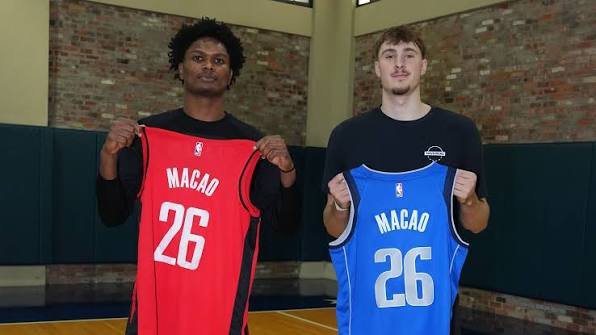
The Dallas Mavericks opened training camp with a compressed calendar: six practices through October 3, then travel to Macao for preseason games against Houston on October 9 and 11. The trip is commercially significant and globally visible, with the NBA positioning the games as part of a broader program involving major partners and fan events. For new coach Dusty May, however, the calendar is first an allocation problem.
Dallas has six new players, seven departures, a new coaching voice, reigning Rookie of the Year Cooper Flagg, health questions around the roster and new management under Masai Ujiri. Every practice minute can be spent on installation, evaluation, conditioning or travel preparation. It cannot be spent on all four equally. The first evidence of May’s coaching will be visible in what he chooses not to teach yet.
Principles have to arrive before the full playbook
A new staff can overwhelm a roster by trying to establish every detail at once. In six practices, Dallas needs a small number of rules that remain useful when the lineup changes: how the defense handles the first pick-and-roll, where the low defender rotates from, how the offense flows after the first action and which spacing landmarks survive a broken play.
Those principles are more portable than a large menu of sets. Macao will create unfamiliar routines, limited correction time and lineups that may exist only for evaluation. A player who understands the rule behind the action can adapt. A player who memorized one sequence may be lost when Houston blows it up at the first screen. May’s installation should be judged by whether Dallas can recognize the same problem from several formations.
Flagg needs responsibility, not artificial protection
Cooper Flagg enters camp with the authority of a Rookie of the Year season and the developmental needs of a young cornerstone. The worst approach would be to alternate between treating him as a finished star and removing every difficult assignment. Dallas should give him defined responsibilities that reveal how he reads the game: initiating some second-side offense, defending multiple positions and making decisions after the first advantage.
The Macao games can be useful because preseason removes some result pressure. Flagg can be tested in actions that may fail before they become reliable. The staff should distinguish a bad outcome from a bad read. A correct pass that a teammate misses belongs in a different category than holding the ball while a rotation opens. Development accelerates when the feedback is attached to the decision, not merely the box score.
Six new players make lineup data seductive and dangerous
With so much roster change, every combination will attract attention. A five-man group may post a strong margin in eight preseason minutes and immediately be labeled a discovery. That is not enough evidence. The coaching staff should use combinations to answer targeted questions: Who organizes transition defense? Which guard can keep the offense connected without dominating the ball? Which frontcourt pairing preserves rebounding without shrinking the floor?
The goal is not to identify one perfect unit in October. It is to understand the dependencies inside each unit. If a lineup succeeds only because one player covers two defensive mistakes, it may not scale. If it succeeds because all five players share the same spacing and coverage rules, it is worth revisiting even if the shots do not fall.
Overseas travel changes the physical calculation
Long travel is not an excuse; it is part of the experiment. Sleep timing, practice intensity and recovery work must be coordinated so that the team does not confuse fatigue with poor fit. A player arriving late to a rotation after a disrupted night should not be evaluated exactly like a player making the same mistake in a normal home practice.
This also argues against using every session as a conditioning test. Dallas needs players fresh enough to learn and communicate. The staff can create competitive intensity in shorter blocks, then use film and walkthroughs for the details. The first camp should build habits that survive an 82-game season, not win an unofficial endurance contest before the preseason begins.
The Houston games can reveal the hierarchy of decisions
Preseason results are secondary, but possession ownership is not. Watch who calls the set after a dead ball, who receives the ball when the first action stalls and which players May trusts to make the coverage call. Those details reveal the working hierarchy of the team before usage rates settle.
Dallas should also test whether its offense can move from one creator to another without resetting completely. A possession that begins with a guard, shifts through Flagg and finishes with a big making a short-roll pass is more valuable evidence than a contested shot made by a veteran. It shows the roster is learning a shared decision chain rather than taking turns.
The business trip and basketball trip can coexist
The NBA’s return to Macao carries sponsorship, community and international-growth goals. Those demands place players and coaches in public settings that are not part of a normal preseason week. Treating that work as a distraction would ignore the modern job. Treating it as cost-free would be equally unrealistic.
The organization’s responsibility is to create boundaries. Media, partner and community events should be scheduled with recovery and practice priorities visible, not added around them at the last minute. A professional global event can strengthen the team’s sense of purpose if everyone understands the plan. It creates resentment when the basketball calendar absorbs every compromise.
What would count as a successful first phase
Dallas does not need to return from Macao looking finished. It needs to return with a common defensive vocabulary, a shortlist of dependable offensive triggers and clearer evidence about who can connect the roster’s stars. May should know which questions require more experimentation and which rules are already stable enough to carry into the next phase of camp.
Watch the Mavericks when a possession breaks. If five players reorganize without looking to the sideline, the installation is taking hold. If every disruption produces a pause and a rescue attempt, the playbook may be ahead of the principles. With six practices and a long flight, Dallas cannot teach everything. It can teach the team how to solve the next thing together.
How Gamehai reached this view
Gamehai reviewed the official league, team and governing-body material listed below, then separated reported facts from editorial interpretation. The analysis focuses on repeatable mechanisms—deployment, sequencing, workload, matchup and decision quality—rather than treating one result as permanent proof. No team, league, athlete, sponsor or commercial partner reviewed or approved this article.
Current-affairs analysis can change as injury information, lineups and official decisions develop. We preserve that uncertainty by identifying what evidence would strengthen or weaken the argument and by correcting material errors under our published corrections policy.